


Growing Salad Leaves Successfully in Shallow Containers
Fill troughs with multipurpose compost and sow little and often. Harvest outer leaves to keep plants producing over several weeks.

Why Shallow Containers Suit Salad Leaves
Salad leaves have shallow, fibrous roots that never need the depth of a raised bed or an open plot. A trough just 15–20 centimetres deep gives them everything they ask for, which means even the smallest allotment, a windy balcony, a doorstep or a sunny windowsill can earn its keep. For anyone juggling a full-size plot with limited time, a set of containers by the back door is often the difference between eating your own leaves and buying floppy ones in a plastic bag.
There are practical advantages beyond convenience. Leaves grown in troughs sit well above the soil, so they stay cleaner and pick up far less grit. You can lift them to waist height for cutting, move them into shade during a July heatwave, or slide them into a cold frame when the first frosts arrive. Slugs still find them, but far fewer than they find a row of lettuce in open ground.
Choosing Containers and Filling Them
Anything that holds compost and drains will do: purpose-made troughs, old mushroom trays, recycled fish boxes, deep seed trays or a length of guttering with end caps. Depth matters more than width. Aim for at least 15 centimetres of compost, and drill or check for drainage holes before you fill — waterlogged compost is the quickest way to lose a sowing.
Fill with a good multipurpose compost, peat-free is absolutely fine, breaking up any lumps as you go. Leave a couple of centimetres of rim clear so that watering does not slosh over the sides, then firm the compost gently with your fingertips and water it thoroughly before sowing. Let it drain for half an hour. Salad leaves are not hungry plants; a standard multipurpose compost holds plenty of nutrients for a cut-and-come-again crop. Overfeeding, particularly with nitrogen-rich liquid feeds, produces soft, sappy growth that aphids adore.
What to Sow
Variety is what makes container growing worthwhile, because you can pick a handful of six different leaves for one bowl. Good choices for troughs include:
- Loose-leaf lettuce such as 'Salad Bowl' or 'Lollo Rossa', which regrow reliably after cutting.
- Rocket, quick, peppery and ready in three to four weeks.
- Mizuna and mustard, including red varieties, for colour and a warm kick.
- Corn salad (lamb's lettuce) and winter purslane, which crop right through the colder months.
- Baby leaf spinach, chard and pak choi, all happy to be cut young.
Sow thinly and aim for a final spacing of two to three centimetres for cut-and-come-again leaves, or five centimetres if you want slightly larger hearts to develop. Scatter seed across the surface and cover with no more than half a centimetre of compost, as many of these seeds need light to germinate. Water with a fine rose and keep the surface moist.
Sow Little and Often
The single habit that separates a steady supply from a glut followed by nothing is succession sowing. Make a small sowing every fortnight from early March through to September, and every three to four weeks under cover in winter. Each trough will give you three or four cuts over six to eight weeks, so four or five troughs on rotation will keep a household in leaves almost year-round.
Only sow a pinch at a time. A teaspoon of lettuce seed is far more than one trough needs, and thickly sown seedlings sulk, bolt and succumb to damping off. Germination takes seven to fourteen days in mild weather; a little slower in a cold spring, so be patient before deciding nothing has come up.
Harvesting Outer Leaves to Keep Plants Cropping
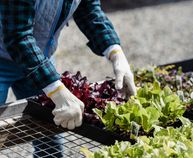
This is where many growers go wrong. Stripping a whole trough in one go gives you a single large harvest and then a bare tray. Instead, take the outer leaves only, cutting them two to three centimetres above the crown with scissors or pinching them off with your fingers, and leave the tight growing centre untouched. The plant responds by producing fresh leaves from the middle, and you can return every few days for another handful over several weeks.
For rocket, mizuna, mustard and baby leaf spinach, the cut-and-come-again method works even better: snip the whole row back to about three centimetres above the compost when the leaves are ten to twelve centimetres tall. Most will reshoot two or three times. Harvest in the cool of the early morning if you can, and water straight after cutting to push the plants back into growth.
Watering, Feeding and Common Problems
Shallow containers dry out fast, so check them daily in summer and water in the morning rather than the evening. Damp foliage overnight invites mildew and slugs. Beyond water, the main difficulties are predictable:
- Bolting in heat. Move troughs into afternoon shade, keep them well watered and choose bolt-resistant varieties for midsummer sowings.
- Flea beetle on rocket. These tiny black beetles riddle leaves with shot holes. Keep the compost consistently moist and drape fine insect mesh over the trough.
- Slugs and snails. Raise containers onto feet or a bench, remove saucers that hold water, and run a night patrol with a torch after rain.
- Aphids. Ease off the feed, spray the undersides of leaves with water, and squash colonies before they spread.
- Exhausted compost. After two or three cuts, growth slows. Tip the spent compost onto the plot or into the bean trench and start again with fresh.
Keep a notebook or a simple label with the sowing date on each trough, and within a season you will have your own rhythm worked out. There is something quietly satisfying about stepping outside with a pair of scissors and a bowl, cutting exactly what you need for lunch and leaving the rest to grow on. That is the real reward of growing salad in shallow containers: not volume, but constancy.

Post a comment