


Choosing the Best Vegetable Seeds for a Small Plot
Select compact varieties and reliable crops that suit your space. Check sowing dates and harvest windows before ordering packets.

Start with the plot you actually have
Most of us begin with grand plans and a seed catalogue the thickness of a novel. The reality is usually a single raised bed, a strip of the back garden, or half an allotment plot inherited in March with the weeds already winning. Before you order anything, measure your growing space honestly and note how much of it gets full sun. A bed one metre wide and three metres long is a genuinely productive patch if you choose what goes in it with care. The trick is to stop thinking about what you want to eat in August and start thinking about what will fit, what will crop, and what you will actually keep on top of.
Compact varieties that earn their keep
Some crops are simply not worth the room they take. Sweetcorn needs a block of at least a dozen plants for decent pollination, and maincrop potatoes will occupy a bed for months. Others are worth their weight in gold because they crop heavily from a small footprint, or because the shop-bought version tastes of nothing.
- Carrots: short, stubby types such as 'Paris Market' or 'Mokum' will grow happily in a container 30cm deep. You get more roots per square metre than from long varieties that demand deep, stone-free soil.
- Courgettes: choose a compact bush type rather than a sprawling one. A single plant is usually enough for a household, and two will have you leaving them on neighbours' doorsteps.
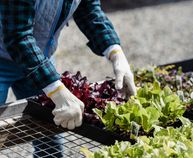
- Salad leaves: cut-and-come-again mixes give you three or four cuttings from one sowing. A half-metre row sown every fortnight will keep you in leaves from May to October.
- Dwarf French beans: varieties such as 'Hestia' crop well in pots and need no supports, which saves both space and faff.
- Beetroot: 'Boltardy' or 'Pablo' can be multi-sown in modules and planted out as clusters, giving a fast crop with almost no thinning.
Reliable crops that rarely let you down
If you are new to growing, weight your seed order towards crops that forgive a missed watering and a late weeding. Radish, spinach, chard, kale, spring onions and climbing French beans will all crop for you in a British summer without much drama. Chard in particular is a gift: it stands through the winter in all but the hardest weather and keeps producing leaves when everything else has given up.
Be honest about the fussy ones. Aubergines and celeriac need a long, warm season; cauliflower wants firm ground and consistent moisture; celery will sulk at the first dry spell. There is nothing wrong with growing them, but do not let them fill your limited space in your first year.
Read the packet before you order
Seed packets are packed with information and most of us only glance at the picture. Before you buy, check four things.
- Sowing dates. Note whether the packet says "sow under glass" or "sow direct". If your only indoor space is a windowsill, a variety needing a heated propagator in February is not for you.
- Harvest window. Work out when the crop will actually be ready and whether that clashes with a holiday or the first frosts. A squash needing 120 days from sowing will not ripen outdoors in a short northern season.
- Final spacing. This tells you how many plants you need. A plant spaced 30cm apart in rows 30cm apart gives roughly eleven plants per square metre — often far fewer than you imagined.
- Packet date and quantity. Check the year printed on the packet. Germination falls away quickly in old seed, and there is little point buying 500 lettuce seeds if you only want twenty plants.
Succession sowing and making a packet last
One packet of seed will almost always outlast a small plot. Sow little and often instead of emptying the packet into a row in April: ten or fifteen lettuce seeds every fortnight, a short row of radish each month, a handful of beetroot every three weeks. You will eat far better for it, and you will not face a glut of everything in the same week.
Stored properly, most seed keeps for years. Keep packets in a sealed jar in a cool, dark cupboard, and add a sachet of silica gel if you have one. Beans, peas and brassicas hold their germination for three or four years. Parsnips and onions are the exception — buy those fresh each season, because last year's packet will disappoint you.
A simple ordering checklist
Before you send off your order, run through this in your head.
- Does this variety fit the space I have, and will it suit a container if that is all I have?
- Will it be ready to harvest across a window I can use, rather than all at once in the same fortnight?
- Can I give it the warmth, water and light it needs at the time of year it wants them?
- Have I included a few cut-and-come-again crops to cover the hungry gap in early summer?
- Have I ordered small quantities of a few things rather than large packets of everything?
Get those five questions right and a small plot will feed you far better than a large one filled with the wrong choices.

Post a comment